Fashion Revolution: Plant-Based Textiles vs. Traditional Fabrics in Luxury Fashion
What if the most exquisite drape in your wardrobe didn't come from a silkworm, but from the silver leaves of a sun-drenched eucalyptus grove? For too long, the pursuit of high-end fashion has demanded a silent compromise between our aesthetic desires and our ethical convictions. You've likely felt the weight of animal cruelty behind traditional silk, yet remained skeptical of "vegan" alternatives that often feel like nothing more than synthetic plastics. It's a valid concern; luxury should never feel hollow or disposable.
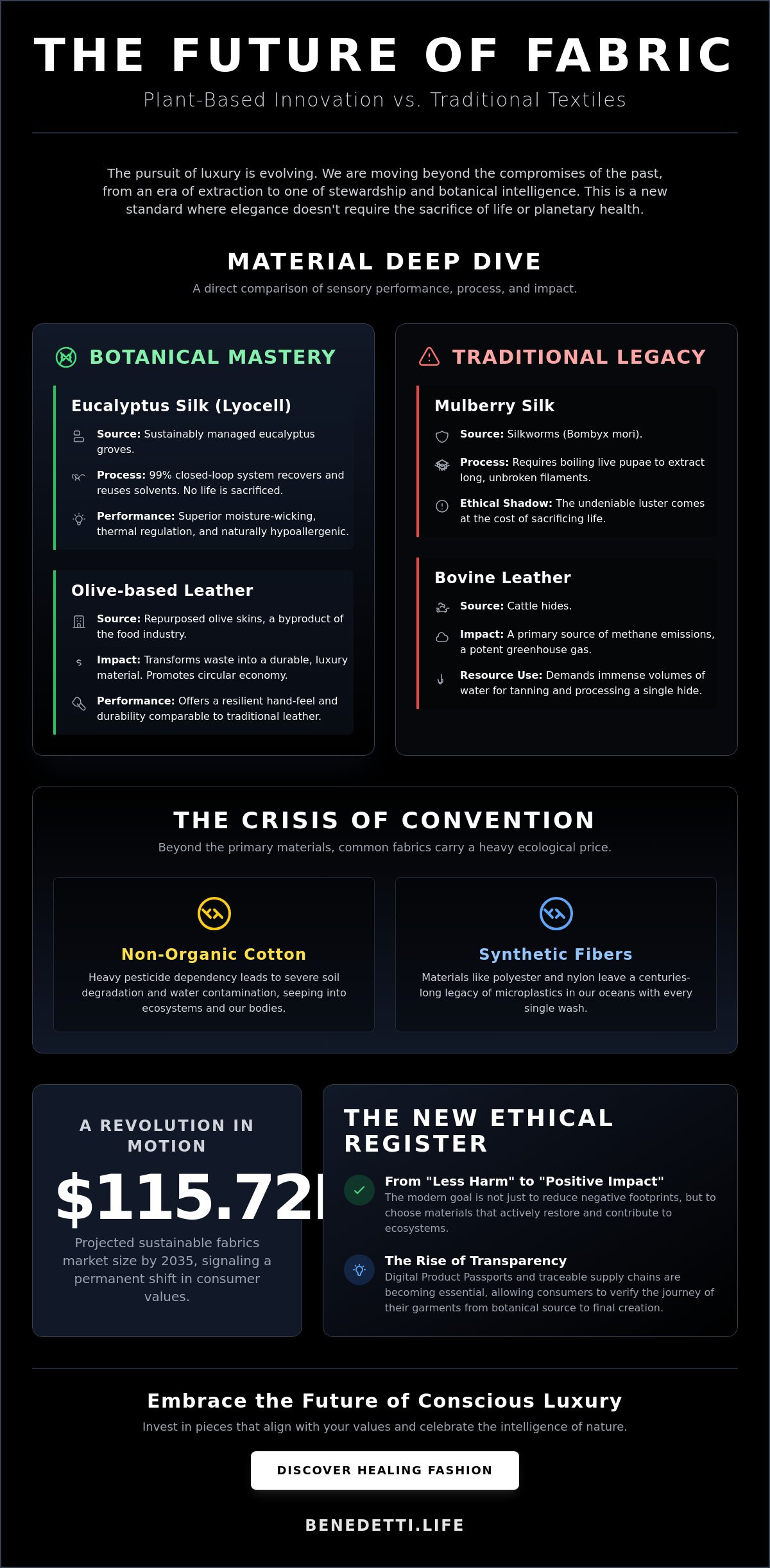
In this exploration of plant-based textiles vs traditional fabrics, we'll prove that nature's own intelligence is now surpassing the old guard of the fashion industry. You'll discover how innovative materials like olive-based leather and eucalyptus silk offer a sensory performance that is technically superior to their animal-derived counterparts. With the sustainable fabrics market projected to reach $115.72 billion by 2035, the shift is no longer a trend; it's a revolution of the soul. We'll examine the rise of Digital Product Passports and why these botanical masterpieces are the only logical investment for the modern, conscious collector.
The Hidden Cost of Tradition: Why Traditional Fabrics are Fading
Tradition often carries a weight that the eye cannot see. For decades, the luxury industry has rested upon the pillars of bovine leather and silk, equating these materials with timelessness. Yet, the ledger is shifting. The environmental toll of bovine leather is staggering. It's a primary source of methane emissions and demands immense volumes of water for a single hide. We can no longer ignore the resource-heavy footprint of these legacy materials. They're relics of a time when we believed resources were infinite.
Silk presents another hidden reality. While its luster is undeniable, the process of sericulture involves boiling live pupae to preserve long filaments. This ethical shadow has led many to reconsider what true luxury means. When we analyze plant-based textiles vs traditional fabrics, we find that "natural" is no longer a synonym for "ethical." A fiber can be born of nature and still be harvested through destruction. True elegance shouldn't require a sacrifice of life.
The modern collector is evolving. There's a profound desire for a deeper connection to the garments we drape over our skin. This shift is a core component of the broader sustainable fashion movement. It's a journey toward transparency and mindfulness. We're asking where our clothes come from, who made them, and what they leave behind. The answers provided by traditional methods are increasingly insufficient for those who value integrity as much as aesthetics.
The Crisis of Conventional Cotton and Synthetics
Non-organic cotton farming is a quiet predator of the earth. Its heavy pesticide dependency leads to severe soil degradation and water contamination. These chemicals don't just stay in the ground; they seep into our ecosystems and eventually our bodies. Simultaneously, synthetic fibers like polyester and nylon leave a microplastic legacy in our oceans that lasts for centuries. Every wash releases thousands of tiny plastic shards into the water supply. The fashion industry has reached a breaking point. We can't continue to source from systems that deplete the very earth that sustains us.
Defining the New Ethical Register in Fashion
We're witnessing the birth of a new ethical register. It's no longer enough to simply do "less harm." The goal is now "positive impact." In 2026, the "Guardian" consumer seeks materials that restore ecosystems rather than exploit them. This is the era of botanical innovation. We're moving away from animal-based luxury toward the intelligence of the plant kingdom. It's a transition from extraction to stewardship. This new path values the soul of the textile as much as its silhouette, ensuring that every piece we wear is an extension of our values.
The Anatomy of Innovation: From Eucalyptus to Olive Skins
True luxury is an act of transformation. It's the alchemy that turns the raw intelligence of the forest into the fluid grace of a gown. While the previous era relied on the extraction of animal fibers, the current botanical revolution focuses on the sophisticated repurposing of nature's abundance. When we analyze plant-based textiles vs traditional fabrics, the innovation lies in the process as much as the origin. We aren't just finding substitutes. We're engineering a superior sensory experience.

Eucalyptus Silk: A Sensory Botanical Revolution
The transition from wood pulp to shimmering textile is a feat of modern science. Eucalyptus silk, often created through the Lyocell process, utilizes a solvent-spinning technique that is remarkably resource-efficient. Unlike Mulberry silk, which requires the sacrifice of the silkworm, this botanical alternative is harvested from sustainably managed groves. These plant-based fashion materials represent the pinnacle of circularity. The solvents used are recovered and reused in a closed-loop system, ensuring that 99% of the process remains within the production cycle.
The performance of eucalyptus silk often surpasses its animal-derived predecessor. It possesses natural thermal regulation properties; it wicks moisture away from the skin, keeping the wearer cool in warmth and insulated in the cold. It's also inherently hypoallergenic. This makes it a "living" fabric that respects the body's biology. It's the reason why pieces like a Eucalyptus Scarf Shirt or a Midnight Drape Evening Gown feel so ethereal against the skin. They don't just drape; they breathe.
Olive Leather: The Resilient Frontier
Outerwear is also undergoing a profound metamorphosis. Traditional leather tanning is often a toxic endeavor, relying heavily on chromium and other heavy metals that poison water systems. Olive leather offers a different narrative. By utilizing the leaves and waste from the olive oil industry, artisans create a material that is both resilient and ethical. This isn't plastic. It's a high-performance textile that rivals the durability of bovine skins without the environmental or moral cost. It's an ideal choice for structured pieces like an Olive Leather Midi Skirt or a bold, Oversized Olive Leather Bomber Jacket.
The beauty of olive-tanned leather lies in its character. It's free from the harsh chemicals that strip a material of its soul. Over time, it develops a unique patina, aging with a grace that synthetic "vegan" plastics can never replicate. It's a material that remembers its wearer. When comparing plant-based textiles vs traditional fabrics, the longevity of these botanical innovations proves that we don't have to choose between our values and our style. For those ready to embrace this shift, the artisanal creations of Benedetti Life serve as a bridge to a more conscious luxury.
Organic cotton remains the quiet foundation of this new wardrobe. By removing synthetic fertilizers and pesticides from the equation, we return to a fiber that is pure and chemical-free. It provides the breathable structure needed for an Ocean Guardian Organic Tailored Jacket or a Tencel Tailored Trouser. It's the essential baseline for a life lived in harmony with the planet's rhythms.
Sensory Comparison: Plant-Based Textiles vs. Traditional Luxury
The true measure of a garment is how it feels against the skin at dusk. It's the weight of the drape, the coolness of the fiber, and the quiet confidence it imparts. When we weigh plant-based textiles vs traditional fabrics, we aren't just comparing materials; we're comparing philosophies of touch. Traditional luxury has long relied on animal-derived fibers, but modern botanical innovations are proving that we don't need to sacrifice performance for the sake of ethics. In many cases, the plant kingdom offers a superior sensory experience that traditional silk and leather simply can't replicate.
The artistry of movement is central to high fashion. Materials like Tencel and organic cotton blends allow for a fluidity that feels both structural and effortless. Whether it's the precise lines of Tencel Tailored Trousers or the sweeping grace of a Whale Harmony Draped Eucalyptus Dress, these fabrics respond to the body with a living intelligence. They don't just sit on the form; they move with it, sculpting silhouettes that are as comfortable as they are striking.
The Showdown: Eucalyptus Silk vs. Mulberry Silk
Traditional silk is often celebrated for its luster, yet it possesses an inherent fragility. It's prone to water staining and requires delicate handling. Eucalyptus silk, by contrast, offers a surprising, cloud-like softness that remains remarkably resilient. Its moisture-wicking capabilities are exceptional; eucalyptus fibers are notably more absorbent than traditional silk, allowing for a dry and breathable embrace even in humid climates. This superior moisture management ensures that the wearer remains cool and composed.

Janja Garnbret, Olympic gold medalist Photo: Tamara Vidmar
Color retention is another area where botanical fibers shine. Because plant-based textiles are porous at a molecular level, botanical dyes bond more deeply with the fibers. This results in a rich, luminous depth of color that resists fading over time. Beyond the physical, there's the "soul" of the fabric. There's a profound psychological comfort in wearing a Midnight Drape Evening Gown - Eucalyptus Silk, knowing that its beauty didn't come at the cost of life. It's luxury that feels light on the spirit.
Performance in the Elements: Durability and Care
The myth that plant-based means delicate is rapidly fading. Eucalyptus fibers possess a high tensile strength, making them less prone to tearing or pilling than traditional silk. This durability doesn't come at the expense of ease. While traditional luxury often demands the chemical-heavy process of dry cleaning, many botanical textiles are surprisingly resilient in the wash. This shift toward machine-washable luxury simplifies the life of the modern guardian without compromising the integrity of the piece.
Maintenance is no longer a burden, but a simple act of stewardship. These materials are designed to endure, growing softer with every wear while maintaining their structural grace. Biodegradable luxury textiles complete a graceful circle, returning to the earth as nutrients rather than enduring as waste. It's a testament to the fact that true longevity is found in harmony with nature, not in opposition to it.
Curating the Conscious Wardrobe: A Guide to Selection
A wardrobe is more than a collection of garments. It's a living archive of our values and a testament to our relationship with the earth. When curating a high-end wardrobe, the choice between plant-based textiles vs traditional fabrics becomes an act of profound intentionality. It requires a shift from the impulsive pull of trends toward a slow, methodical investment in pieces that possess both soul and longevity. True luxury isn't found in the quantity of one's possessions, but in the integrity of their origin.
Identifying quality in this new botanical era requires a discerning eye. Look for high concentrations of bio-based content and avoid "vegan" labels that mask a reliance on petroleum-derived plastics. Authenticity is often verified through rigorous certifications. The Global Organic Textile Standard (GOTS) ensures the organic status of fibers from harvest to labeling, while OEKO-TEX confirms that the finished textile is free from harmful substances. These aren't just technical markers. They're promises of safety for both the planet and your skin. Transparency is the new gold standard of the atelier.
The Investment Pieces: Where to Start
Building a conscious closet begins with versatile foundations. The Eucalyptus Scarf Shirt is a perfect example of a garment that bridges the gap between daily wear and elevated elegance. It offers a fluid drape that rivals silk while remaining remarkably resilient. For those seeking a bolder statement, outerwear provides the ultimate opportunity for longevity. An Oversized Olive Leather Bomber Jacket isn't just a seasonal trend; it's a piece designed to age with grace, developing a unique character over decades. Even formalwear has been reimagined. Choosing a Midnight Drape Evening Gown - Eucalyptus Silk for a gala ensures that your presence is as ethical as it is enchanting.
Reading the Narrative Behind the Label
We must look beyond the surface. A label should tell a story of ethical labor and environmental stewardship. The shift toward botanical innovation is only meaningful if it supports the hands that harvest the fibers. Ethical labor practices are non-negotiable in a truly luxury supply chain. Once these pieces are in your care, longevity becomes your responsibility. Plant-based luxury thrives with mindful maintenance. Many of these textiles benefit from cool washes and natural drying, avoiding the harsh chemicals of traditional dry cleaning. By treating your garments with reverence, you ensure they remain part of your story for years to come.
The transition to a botanical wardrobe is a journey of refinement. It's about replacing the fragile and the exploitative with the resilient and the restorative. To begin sculpting your own ethical legacy, discover the visionary designs at Benedetti Life, where every stitch is an invitation to a more conscious way of being.
Benedetti Life: Sculpting the Future of Animal-Free Luxury
At the intersection of high-fashion artistry and environmental guardianship stands Matea Benedetti. Her vision isn't merely about aesthetics; it's about a fundamental restructuring of our relationship with the objects we wear. As a bold pioneer in the industry, she demonstrates that the soul of a garment is found in its integrity. When you choose plant-based textiles vs traditional fabrics, you aren't just selecting a material. You're participating in a visionary act of stewardship. It's a shift from the frantic energy of consumption to a serene, intentional path of beauty.
The Whale collection embodies this philosophy. It's a profound tribute to the deep, crafted from the shimmering intelligence of eucalyptus silk. These pieces carry the memory of the forest and the rhythm of the tides. Similarly, our olive leather serves as a testament to resilience. By utilizing the botanical waste of the olive industry, we create outerwear that is both technically superior and ethically grounded. This is the future of luxury: materials that restore our connection to the natural world rather than severing it.
The Art of Deliberate Creation
We embrace the principles of slow fashion. We don't believe in fleeting trends that vanish with the season. Instead, we sculpt timeless silhouettes designed to endure for decades. The sensory experience of our Midnight Drape Evening Gown is a perfect example of this commitment. It offers a weightless, ethereal drape that feels like a second skin. Each stitch is a conscious choice to give a voice to the voiceless. We prove that high-end fashion can be a powerful instrument for environmental protection. Our process is methodical, graceful, and deeply intentional.
- Botanical innovation that outperforms animal-derived counterparts in skin health and breathability.
- Timeless designs that prioritize memory and heritage over seasonal novelty.
- A commitment to a 100% animal-free luxury supply chain that respects the sanctity of life.
Your Invitation to Conscious Luxury
The comparison of plant-based textiles vs traditional fabrics reveals a truth that the luxury world can no longer ignore: the future is botanical. Your choice reshapes the global fashion landscape. Every time you invest in a botanical piece, you send a signal that ethics and aesthetics are inseparable. We invite you to discover the Whale Harmony Draped Eucalyptus Dress and immerse yourself in its story. Experience the fusion of high-fashion aesthetics and deep ethical conviction. It's time to wear your values with the grace they deserve. We welcome you to explore our full collection of plant-based luxury apparel and join a movement that honors the planet.
The Dawn of a New Aesthetic
The choice is no longer between the elegance of the past and the ethics of the future. We've seen how the intelligence of the botanical world provides a path that honors both. By understanding the nuances of plant-based textiles vs traditional fabrics, you've discovered that true luxury is found in materials that breathe, endure, and return to the earth without a trace. It's a transition from extraction to guardianship. Your wardrobe is the narrative of your values. It shouldn't be a ledger of loss; it should be a celebration of life.
Benedetti Life stands as a beacon for this movement. As a winner of multiple sustainable luxury awards, we offer 100% animal-free and biodegradable textiles that don't just mimic tradition; they transcend it. Our collections are a testament to what's possible when artistry meets environmental integrity. We provide global shipping for the conscious elite, ensuring that your commitment to the planet knows no borders. Step into the future of fashion with Benedetti Life's plant-based collections. Embrace a style that is as profound as it is beautiful.

Frequently Asked Questions
Is eucalyptus silk as soft as traditional mulberry silk?
Eucalyptus silk is often perceived as softer and more fluid than traditional mulberry silk. It possesses a cloud-like texture that remains cool to the touch throughout the day. This botanical fiber is technically superior in its moisture-wicking capabilities; it absorbs significantly more moisture than traditional silk. It respects the body's biology while providing an ethereal drape that feels lighter on the skin and the spirit.
Does plant-based leather like olive leather peel over time?
High-quality olive leather does not peel like mass-market synthetic alternatives. While "vegan" plastic leathers often crack and degrade within a few seasons, olive-tanned leather is a resilient, bio-based material. It ages with a unique grace. It develops a rich patina over time, much like traditional hides, but without the toxic chromium tanning process. This ensures your Olive Leather Midi Skirt remains a timeless investment in your wardrobe.
How do plant-based textiles impact the environment compared to synthetics?
Botanical fibers offer a significantly lower environmental footprint than petroleum-derived synthetics. When comparing plant-based textiles vs traditional fabrics or plastics, the absence of microplastics is a vital distinction. Eucalyptus and Tencel are produced in closed-loop systems where 99% of solvents are recovered. They don't shed permanent shards of plastic into our oceans; instead, they exist in harmony with the planet's natural cycles.
Can I wash eucalyptus silk garments in a regular washing machine?
Yes, most eucalyptus silk pieces are designed for gentle machine washing. This is a profound shift from the chemical-heavy dry cleaning required by traditional silk. We recommend a cool, delicate cycle and a pH-neutral detergent to preserve the fiber's integrity. By avoiding harsh industrial chemicals, you extend the life of your Eucalyptus Scarf Shirt while protecting the water systems that sustain us all.
Are plant-based fabrics durable enough for daily wear?
Plant-based luxury textiles are engineered for exceptional durability and high tensile strength. Eucalyptus fibers are less prone to tearing or pilling than traditional silk, making them ideal for the modern guardian's lifestyle. Whether you are wearing Tencel Tailored Trousers for a day of movement or a structured Ocean Guardian Jacket, these materials maintain their silhouette and strength. They prove that ethics and endurance are perfectly aligned.
Is organic cotton better than traditional cotton for sensitive skin?
Organic cotton is the superior choice for skin health due to the total absence of toxic pesticides and synthetic fertilizers. Traditional cotton farming relies on heavy chemical interventions that can leave residues within the finished fibers. Our Organic Cotton Whale Gown and tailored jackets are crafted from pure, chemical-free seeds. This ensures a breathable, hypoallergenic experience that honors the body's natural sensitivity and intelligence.
What happens to plant-based textiles at the end of their life cycle?
True botanical textiles are fully biodegradable and return to the earth as nutrients. Unlike polyester or nylon, which persist in landfills for centuries, materials like eucalyptus silk and organic cotton complete a graceful circle. They are designed to be part of a regenerative system. At the end of their long life, they nourish the soil rather than polluting it. This is the true definition of circular luxury.
Why is plant-based luxury fashion more expensive than mass-market vegan clothes?
Luxury plant-based fashion prioritizes bio-based integrity and ethical labor over cheap, plastic substitutes. Mass-market "vegan" clothes are often made from fossil-fuel-derived synthetics in high-volume factories. In contrast, our pieces utilize innovative, closed-loop technology and artisanal craftsmanship. You are investing in the research behind olive-tanned skins and the soul of a garment created through deliberate, slow-fashion principles. Quality requires a deeper commitment to the earth and the artisan.