The Truth Behind Benedetti Life Prices: Why Conscious Luxury Costs What It Costs
Luxury Is Not a Price. It Is a Structure of Truth.
True luxury is not defined by exclusivity alone, but by integrity made visible.
At Benedetti Life, we do not believe in opaque pricing systems where value is implied but never explained. Instead, we follow a principle that was once more common in heritage European ateliers and is now returning through the new wave of conscious luxury:
If you cannot explain the price, you cannot justify the value.

This philosophy is supported by modern research in sustainable fashion economics, including findings from the Ellen MacArthur Foundation, McKinsey & Company’s State of Fashion reports, and the European Commission’s Sustainable Product Initiative, all of which highlight the same structural reality:
Small-batch, ethical, traceable production in Europe inherently carries significantly higher unit costs than mass production models.
Why Benedetti Life Sits in the Middle–High Luxury Segment
Benedetti Life operates in a conscious luxury segment defined by three pillars:
1. European Production Integrity
Our pieces are produced in Slovenia or Italy within certified ateliers and small family-run production units.
2. Premium Material Sourcing
Fabrics and components originate mostly from Italy and Germany, where textile quality standards remain among the highest in the world.
3. Small-Scale Craftsmanship
Each piece is produced in limited quantities to prevent overproduction, aligning with EU sustainability directives and anti-waste frameworks.
This positioning is not a marketing choice. It is a structural outcome of how responsibly made fashion functions in Europe today.
A Verified Reality of Fashion Economics: The x3 Retail Multiplier
In global fashion economics, it is widely documented that traditional retail pricing often follows a multiplier of x2.8 to x 3.5 over production cost, depending on category.
However, in luxury and premium designer segments, the structure typically extends to x3 or higher, due to:
- Low-volume production inefficiency
- Ethical labor costs
- European VAT structures (22%)
- Small brand operational overhead
- Sustainable material sourcing
- Development and prototyping cycles
This is confirmed in industry analyses by:
- McKinsey & Company (State of Fashion report)
- Business of Fashion (BoF) luxury pricing breakdowns
- European Commission textile value chain reports
Benedetti Life remains intentionally below extreme luxury markups, operating in a responsible middle–high range rather than speculative luxury inflation.
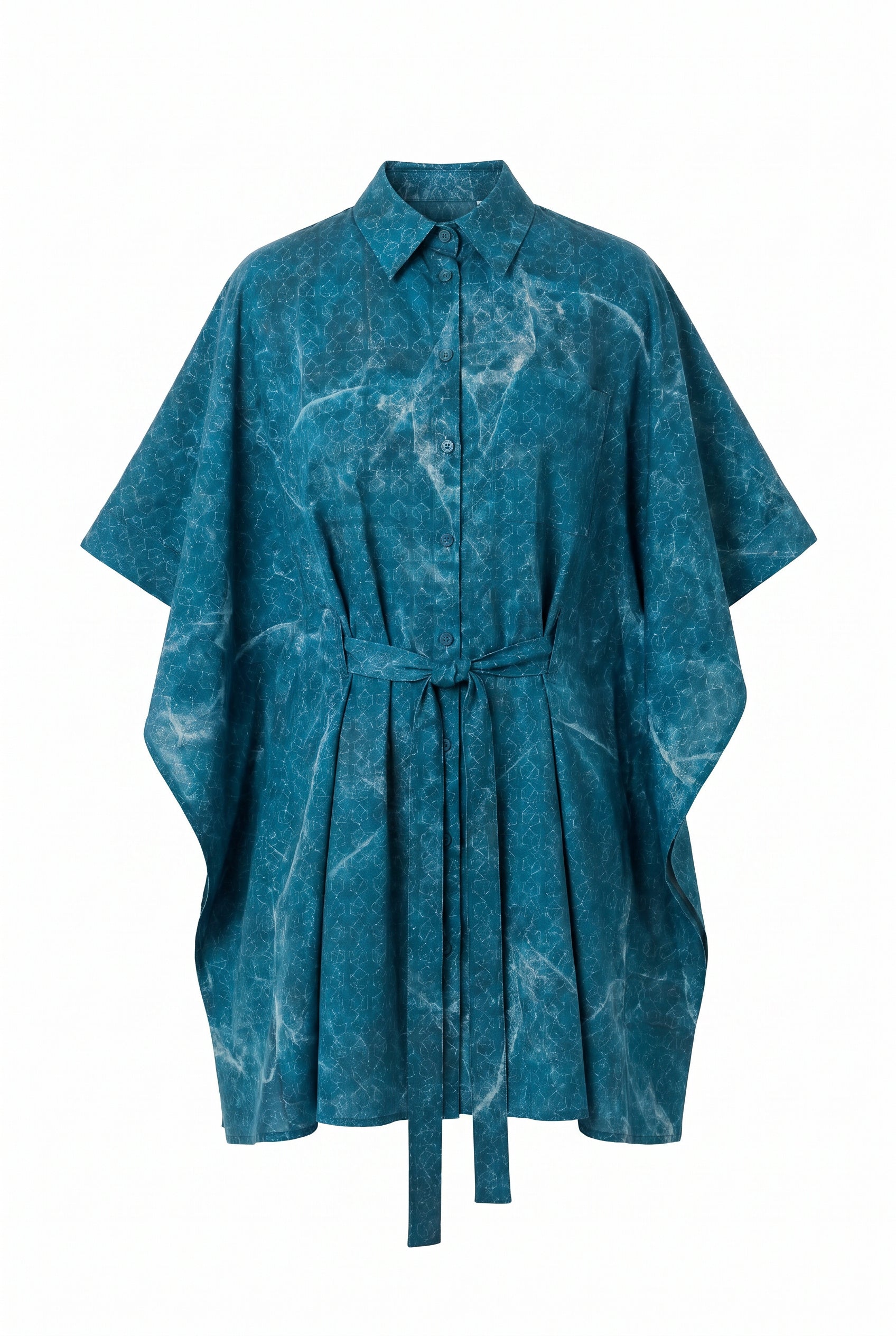
Case Study: Kaftan (€550 Retail Price)
Full Transparency Cost Breakdown
To make pricing tangible, here is a real production logic for a Benedetti Life kaftan.

1. Materials (Italy / Germany sourcing)
- Printed fabric: €35/m × 1.8m = €63
- Corozo buttons (10 pcs): €8
- Fabric transport (Italy/Germany → atelier): €25-45
2. Construction (Slovenia / EU atelier)
- Sewing & assembly: €80
- Pattern development (6 hours × €25): €150
- Sampling, fitting, corrections: €35
3. Logistics & Operations (EU chain)
- Intra-EU transport & handling: €18
- Sustainable packaging: €8
- Quality control & finishing: €12
4. Brand Development & Hidden Costs
- Design research & development allocation: €450
- Small-scale production inefficiency: €28
- Payment processing & platform fees: €20
5. Taxes & VAT Structure
- VAT impact (EU 22% structure embedded): ~€99
True Production Cost Range
€280 – €400 per piece
Retail Price
€550
What This Means
Unlike fast fashion or inflated luxury models, Benedetti Life operates with a minimal, transparent margin structure that supports:
- Future collection development
- Artisan wages and fair labor systems
- Continued EU-based production
- Material innovation (botanical & animal-free textiles)
- Small brand survival in a high-cost ethical ecosystem
There is no artificial scarcity pricing.
There is only real cost + responsible continuity.
Why Independent European Luxury Is Structurally Expensive
According to the European Environment Agency and McKinsey apparel sustainability reports, responsible fashion production in Europe is significantly more expensive due to:
- Strict environmental compliance laws
- Higher labor protections and wages
- Energy cost differences vs. offshore manufacturing
- Smaller production batches
- Traceability requirements under EU Green Deal policies
These are not inefficiencies.
They are ethical guarantees.
The Hidden Layer of Value
What is not visible in the price tag:
- Multiple design iterations per garment
- Ethical certification of materials
- Compliance with EU sustainability frameworks
- Small-batch production coordination
- Long-term durability engineering
- Slow fashion development cycles
These elements form the invisible architecture of every Benedetti Life piece.
Luxury Re-Defined: From Excess to Awareness
We are witnessing a structural shift in global fashion.
As noted by the Ellen MacArthur Foundation, the future of fashion is moving toward:
“A regenerative model where value is measured not only economically, but environmentally and socially.”
Benedetti Life exists within this transition.
We do not design for consumption cycles.
We design for longevity, memory, and meaning.
A Closing Statement
At Benedetti Life, price is not a mystery.
It is a map.
A map of hands that crafted the garment.
Of materials that were responsibly sourced.
Of systems that refuse exploitation.
Of time that was not accelerated for profit.
True luxury is not about what is expensive.
It is about what is honest, traceable, and intentional.
And in that sense, every Benedetti Life piece is not simply a garment.
It is a transparent act of value.

Frequently Asked Questions
Why are Benedetti Life pieces in the €500+ range?
Because each piece is produced in Europe with small-scale ethical manufacturing, premium materials, and full transparency in cost structure.
Is Benedetti Life more expensive than fast fashion?
Yes, but for structural reasons: fair wages, EU production, sustainable materials, and limited production volumes.
Do luxury brands typically use higher markups?
Yes. Industry data shows average retail markups of x2–x3 in premium fashion, and higher in traditional luxury segments.
Why is small production more expensive?
Because fixed costs (development, sampling, logistics) are distributed across fewer pieces.